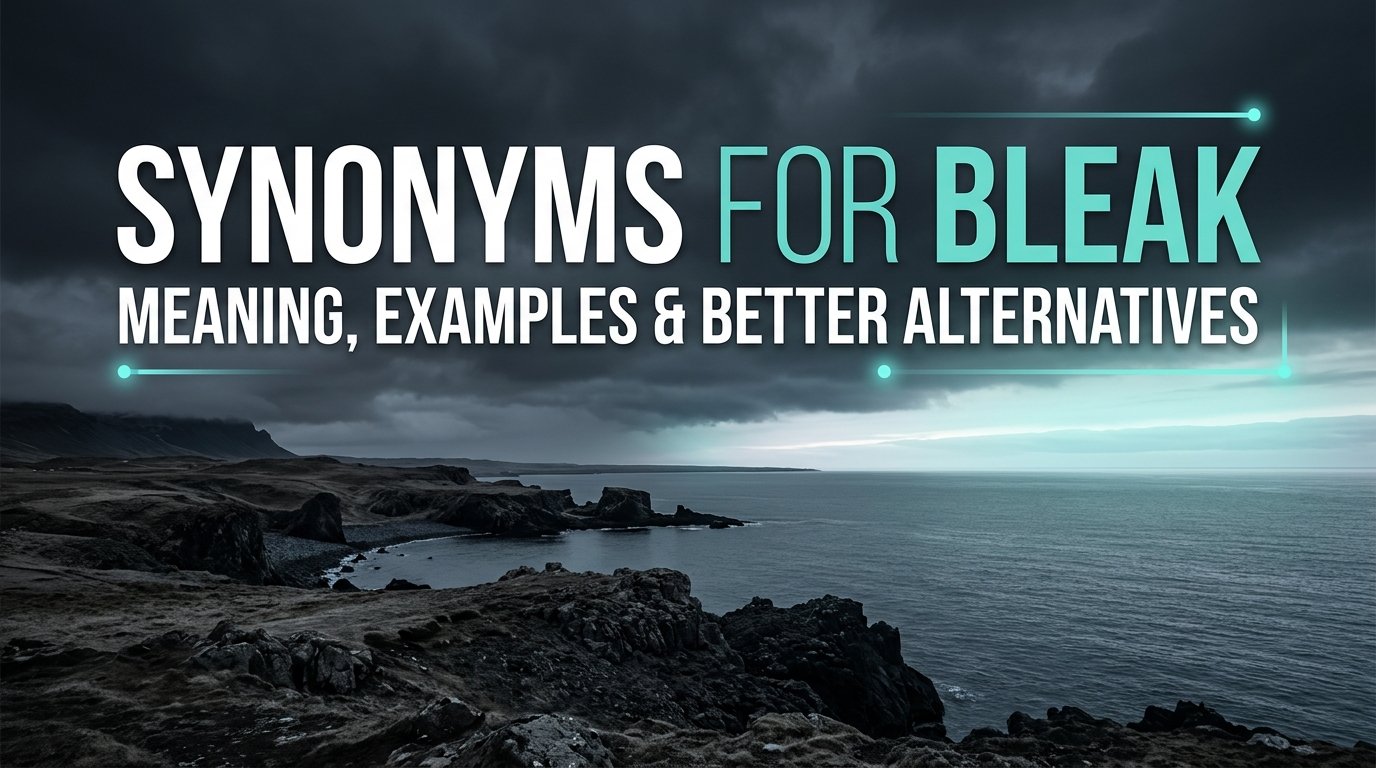
If you need a synonym for bleak, the best choice depends on what you are describing. Dismal, gloomy, dreary, grim, desolate, cheerless, depressing, and hopeless are among the closest alternatives, but each emphasizes something slightly different. Desolate highlights isolation, dreary suggests dullness or monotony, and hopeless focuses specifically on a lack of hope. For landscapes, words such as barren, bare, and windswept may be more precise.
Quick Answer: What Are the Best Synonyms for Bleak?
The closest synonyms for bleak include dismal, gloomy, dreary, grim, desolate, cheerless, depressing, and somber. However, the best alternative depends on context. Use desolate for an empty or isolated place, dismal for something deeply depressing, dreary for dull or monotonous conditions, and hopeless when the main idea is that there is little or no chance of improvement.
Core Synonyms for Bleak
| Word | Relationship | Meaning | Strength | Best Context |
|---|---|---|---|---|
| Dismal | Direct/near synonym | Very gloomy or depressing | Strong | Situations, prospects, conditions |
| Gloomy | Direct synonym | Dark, depressing, or lacking hope | Medium–strong | Moods, outlooks, places |
| Dreary | Near synonym | Dull, depressing, and monotonous | Medium | Weather, places, routines |
| Grim | Near synonym | Harsh, serious, or depressing | Strong | Situations, realities, prospects |
| Desolate | Near synonym | Empty, isolated, and lacking life | Strong | Places, landscapes |
| Cheerless | Near synonym | Lacking happiness or comfort | Medium | Rooms, environments, moods |
| Depressing | Contextual alternative | Causing sadness or discouragement | Medium–strong | Situations, news, environments |
| Somber | Near synonym | Serious, dark, or subdued | Medium | Moods, events, tone |
| Hopeless | Contextual alternative | Offering little or no hope | Very strong | Futures, situations, prospects |
| Barren | Contextual alternative | Empty, unproductive, or without vegetation | Strong | Land, landscapes |
| Bare | Contextual alternative | Lacking covering, decoration, or vegetation | Mild–medium | Landscapes, rooms |
| Windswept | Contextual alternative | Exposed to strong winds | Neutral | Landscapes, coasts, hills |
| Forbidding | Contextual alternative | Unwelcoming or intimidating | Strong | Places, buildings |
| Austere | Contextual alternative | Severe, plain, or lacking comfort | Medium | Rooms, settings, styles |
| Cold | Contextual alternative | Unpleasantly cold or lacking warmth | Mild–strong | Weather, environments |
| Raw | Contextual alternative | Cold, harsh, or unpleasant | Medium | Weather |
| Unpromising | Contextual alternative | Giving little reason for optimism | Strong | Prospects, situations |
| Disheartening | Contextual alternative | Causing loss of confidence or hope | Strong | News, results, situations |
The major dictionaries support several of these distinctions. Cambridge groups gloomy, dreary, dismal, grim, and depressing with bleak when it means depressing or unpromising, while its thesaurus separately identifies words such as bare, barren, windswept, and desolate for physical settings. Merriam-Webster similarly distinguishes cheerless, desolate, dismal, dreary, and gloomy while explaining their differences.
What Does Bleak Mean?
Bleak is an adjective with several related meanings. It can describe a place that is empty, exposed, cold, or unattractive; weather that is cold and unpleasant; or a situation or future that offers little hope.
For example:
- a bleak landscape — a barren, exposed, or unwelcoming landscape
- bleak weather — cold, unpleasant weather
- a bleak future — a future that appears unlikely to improve
- a bleak outlook — a discouraging assessment of what lies ahead
Cambridge defines bleak in terms of an empty or unwelcoming place, unpleasantly cold weather, and situations in which there is little or no hope for the future. Merriam-Webster also includes the ideas of barrenness, coldness, lack of warmth or kindliness, lack of hope, and severe simplicity.
Pronunciation
Bleak: /bliːk/
The vowel sound is the same as in week.
Word Forms
- bleak — adjective
- bleaker — comparative adjective
- bleakest — superlative adjective
- bleakly — adverb
- bleakness — noun
The Closest Synonyms for Bleak
1. Dismal
Dismal is one of the closest general alternatives to bleak. It describes something extremely gloomy, depressing, or discouraging.
Example:
The company’s financial outlook looked dismal.
Choose dismal when you want stronger emphasis on depressing conditions.
2. Gloomy
Gloomy can describe darkness, sadness, depression, or a pessimistic outlook.
Example:
The economic forecast remains gloomy.
It is especially natural with words such as outlook, mood, forecast, future, and prospects.
3. Dreary
Dreary emphasizes dullness, monotony, and a lack of cheer.
Example:
It was a dreary afternoon of cold rain.
Use dreary when something feels depressing because it is dull, gray, repetitive, or monotonous.
4. Grim
Grim suggests something harsh, serious, unpleasant, or depressing.
Example:
The investigators presented a grim picture of the situation.
Compared with bleak, grim can sound more severe and serious.
5. Desolate
Desolate is especially useful for places that are empty, isolated, abandoned, or lacking human presence.
Example:
They drove across a desolate stretch of desert.
Merriam-Webster notes that desolate adds an element of remoteness or lack of human contact to an already disheartening quality.
6. Cheerless
Cheerless means lacking happiness, comfort, or anything that creates a pleasant atmosphere.
Example:
The small room looked cold and cheerless.
It is often a good choice for rooms, homes, environments, and moods.
7. Depressing
Depressing describes something that causes sadness, discouragement, or a loss of optimism.
Example:
The report contained some depressing news about the economy.
Unlike bleak, depressing focuses strongly on the emotional effect something produces.
8. Somber
Somber describes a serious, subdued, or dark mood or atmosphere.
Example:
The ceremony had a somber atmosphere.
It is often more restrained and formal than gloomy or depressing.
Context-Specific Alternatives for Bleak
Not every useful alternative is a true synonym in every sentence. Some words work only when bleak has a particular meaning.
For a Bleak Landscape
Use:
- barren
- bare
- desolate
- windswept
- forbidding
- exposed
Examples:
The hikers crossed a barren plateau.
A windswept coastline stretched for miles.
They reached a desolate village far from the main road.
Cambridge specifically lists bare, barren, windswept, weather-beaten, and desolate among words related to bleak when describing physical environments.
For a Bleak Future or Outlook
Use:
- dismal
- gloomy
- grim
- hopeless
- unpromising
- discouraging
Examples:
The team’s chances of recovery looked grim.
Analysts described the economic outlook as gloomy.
Without additional funding, the project’s future appeared unpromising.
For Bleak Weather
Use:
- dreary
- cold
- raw
- chilly
- gloomy
- wintry
Examples:
It was a dreary morning with steady rain.
A raw wind swept across the harbor.
The coast looked especially gloomy under the gray sky.
For a Bleak Mood or Atmosphere
Use:
- gloomy
- somber
- cheerless
- depressing
- morose
- joyless
Example:
The empty house had a cheerless atmosphere.
Which Word Should I Use Instead of Bleak?
Choose “dismal” when:
You want to emphasize a very depressing or discouraging condition.
The company’s financial results were dismal.
Choose “gloomy” when:
You are describing a pessimistic outlook, mood, or atmosphere.
The political outlook remains gloomy.
Choose “dreary” when:
The main idea is dullness, monotony, or unpleasant weather.
Another dreary winter morning began.
Choose “desolate” when:
You want to emphasize isolation, emptiness, or lack of human presence.
They discovered a desolate road through the mountains.
Choose “grim” when:
The situation is serious, harsh, or deeply discouraging.
The doctors gave the family a grim assessment.
Choose “hopeless” when:
The central meaning is that there is little or no hope.
The situation initially seemed hopeless.
Choose “barren” when:
You are describing land or a landscape lacking vegetation or productivity.
The region contains vast areas of barren land.
Bleak vs. Gloomy
Bleak and gloomy overlap when describing depressing situations, places, or prospects.
The difference is emphasis:
- Bleak often suggests barrenness, coldness, harshness, or little hope.
- Gloomy more broadly suggests darkness, sadness, depression, or pessimism.
Compare:
The bleak landscape contained almost no vegetation.
She had a gloomy view of the company’s future.
You can use gloomy for a mood or outlook very naturally, while bleak often creates a stronger impression of harshness or lack of hope.
Bleak vs. Dreary
Both words can describe unpleasant places and weather.
Dreary emphasizes dullness and monotony.
Bleak emphasizes coldness, barrenness, harshness, or lack of hope.
Compare:
It was a dreary Monday morning.
The abandoned mining town looked bleak.
A repetitive routine may be dreary, while an exposed and empty landscape is more naturally bleak.
Bleak vs. Dismal
These words are often interchangeable when describing bad prospects or depressing conditions.
However, dismal tends to emphasize the extremely depressing nature of something.
The team’s chances looked bleak.
The team’s performance was dismal.
The first focuses on an unfavorable future; the second emphasizes how poor or depressing the performance was.
Bleak vs. Desolate
The distinction is especially important for physical places.
Bleak can mean cold, barren, exposed, unattractive, or discouraging.
Desolate more strongly suggests emptiness, isolation, abandonment, or lack of human contact.
A bleak hillside stood beneath a gray sky.
A desolate village had been abandoned for decades.
Merriam-Webster makes this distinction explicitly: desolate adds remoteness or lack of human contact to the disheartening quality.
Bleak vs. Grim
Grim often sounds more severe and serious.
The report presented a grim picture of the crisis.
The economic outlook looked bleak.
Both work for difficult situations, but grim can emphasize severity, while bleak more strongly conveys a lack of hope or an unfavorable outlook.
Common Collocations With Bleak
Some natural combinations include:
- bleak future
- bleak outlook
- bleak prospects
- bleak picture
- bleak assessment
- bleak landscape
- bleak environment
- bleak weather
- bleak situation
- bleak reality
- bleak conclusion
- bleak years
- bleak conditions
- bleak vision
Merriam-Webster’s usage data also shows common combinations involving landscape, outlook, prospects, picture, assessment, weather, and other environmental or evaluative nouns.
Better Alternatives by Collocation
| Phrase | Natural alternatives |
|---|---|
| bleak future | grim future, gloomy future, hopeless future |
| bleak outlook | gloomy outlook, dismal outlook, grim outlook |
| bleak prospects | poor prospects, grim prospects, unpromising prospects |
| bleak landscape | barren landscape, desolate landscape, windswept landscape |
| bleak weather | dreary weather, cold weather, gloomy weather |
| bleak situation | grim situation, desperate situation, depressing situation |
| bleak picture | grim picture, gloomy picture, discouraging picture |
Common Mistakes With Bleak Synonyms
Mistake 1: Treating every related word as an exact synonym
Words such as barren, cold, windswept, and hopeless can replace bleak only in particular contexts.
For example:
The future is bleak.
You cannot automatically replace bleak with windswept because windswept describes exposure to wind, not a lack of hope.
Mistake 2: Using “desolate” for every depressing situation
Desolate is particularly strong for empty, isolated, or abandoned places. It can also describe emotional states, but it is not a universal replacement for bleak.
Mistake 3: Using “dreary” when the main idea is hopelessness
Dreary is excellent for dull weather, repetitive routines, and monotonous environments. For a hopeless future, grim, dismal, hopeless, or gloomy may be more precise.
Mistake 4: Assuming “gloomy” always means dark weather
Gloomy can describe physical darkness, but it also commonly describes moods, opinions, predictions, and prospects.
The analysts are gloomy about next year’s economy.
Related Words That Are Not Exact Synonyms
Some words belong to the same semantic field but should not be treated as universal synonyms:
- pessimistic — expecting bad outcomes
- miserable — extremely unhappy or uncomfortable
- melancholy — characterized by thoughtful or subdued sadness
- morose — sullen and gloomy in mood
- stark — severe, bare, or sharply plain
- austere — severe or lacking comfort and decoration
- spartan — simple and lacking luxury
- harsh — severe or unpleasant
- somber — serious, subdued, or dark
These can be useful alternatives in particular sentences, but their meanings are narrower or different from bleak.
Antonyms of Bleak
The opposite of bleak depends on its sense.
For a Landscape
A positive landscape can be described as lush, green, fertile, sheltered, or welcoming.
For Weather
When conditions are pleasant rather than bleak, words such as warm, mild, pleasant, and balmy are suitable.
For a Situation or Future
A more positive situation or future may be described as hopeful, promising, encouraging, optimistic, or bright.
For Example:
A lush and welcoming landscape can create a bright, hopeful impression, while mild and pleasant weather may make the overall setting feel more inviting.
The future once looked bleak, but the latest results are promising.
Frequently Asked Questions
What is the closest synonym for bleak?
Dismal is one of the closest general synonyms for bleak, especially when describing depressing situations or prospects. Gloomy, dreary, grim, and desolate are also close, but each carries a slightly different emphasis.
What is another word for a bleak future?
Good alternatives include grim future, gloomy future, hopeless future, dismal future, and unpromising future. Hopeless is strongest when you specifically mean that there is little or no chance of improvement.
What is another word for a bleak landscape?
Depending on the meaning, use desolate, barren, bare, windswept, exposed, or forbidding. Desolate emphasizes emptiness and isolation, while barren emphasizes a lack of vegetation or productivity.
Is “gloomy” a synonym for “bleak”?
Yes. Gloomy is a close synonym when bleak means dark, depressing, pessimistic, or lacking hope. However, bleak can also describe a barren or exposed physical landscape, where words such as desolate or barren may be more precise.
Is “dreary” the same as “bleak”?
Not exactly. Both can describe unpleasant weather or depressing environments, but dreary emphasizes dullness and monotony, while bleak often suggests harshness, barrenness, coldness, or little hope.
Is “desolate” stronger than “bleak”?
Not universally. Desolate is more specific when a place is empty, isolated, or abandoned. Bleak has a broader range of meanings and can describe places, weather, situations, prospects, and futures.
What is a formal synonym for bleak?
Depending on context, dismal, grim, somber, austere, or unpromising can work in formal writing. The best choice depends on whether you are describing an outlook, environment, mood, or physical setting.
What is the opposite of bleak?
Common antonyms include hopeful, promising, cheerful, pleasant, bright, warm, and welcoming. The correct opposite depends on whether bleak describes a future, mood, landscape, or weather.
Conclusion
The best synonym for bleak depends on the specific meaning you want to express. Choose dismal or gloomy for depressing situations and prospects, dreary for dull or monotonous conditions, grim for severe or discouraging circumstances, and desolate for isolated or empty places. For physical landscapes, barren, bare, and windswept can be more precise. The key is not to choose the most similar-looking word, but the word that matches the exact context.

Michael Thompson is an English language specialist and experienced editor who focuses on vocabulary development and clear communication. He creates high-quality synonym guides, word comparisons, and writing tips to help students and professionals express their ideas more effectively. His work combines linguistic knowledge with practical SEO strategies to make learning both useful and engaging.